CULTURE · 2026-09-24
Japchae as Banchan vs Main: How the Same Noodles Change Job
By Japchae Curator
A longer answer to the query this site already ranks for: when japchae is a small side, when it is the lunch, and how to portion it.
TL;DR
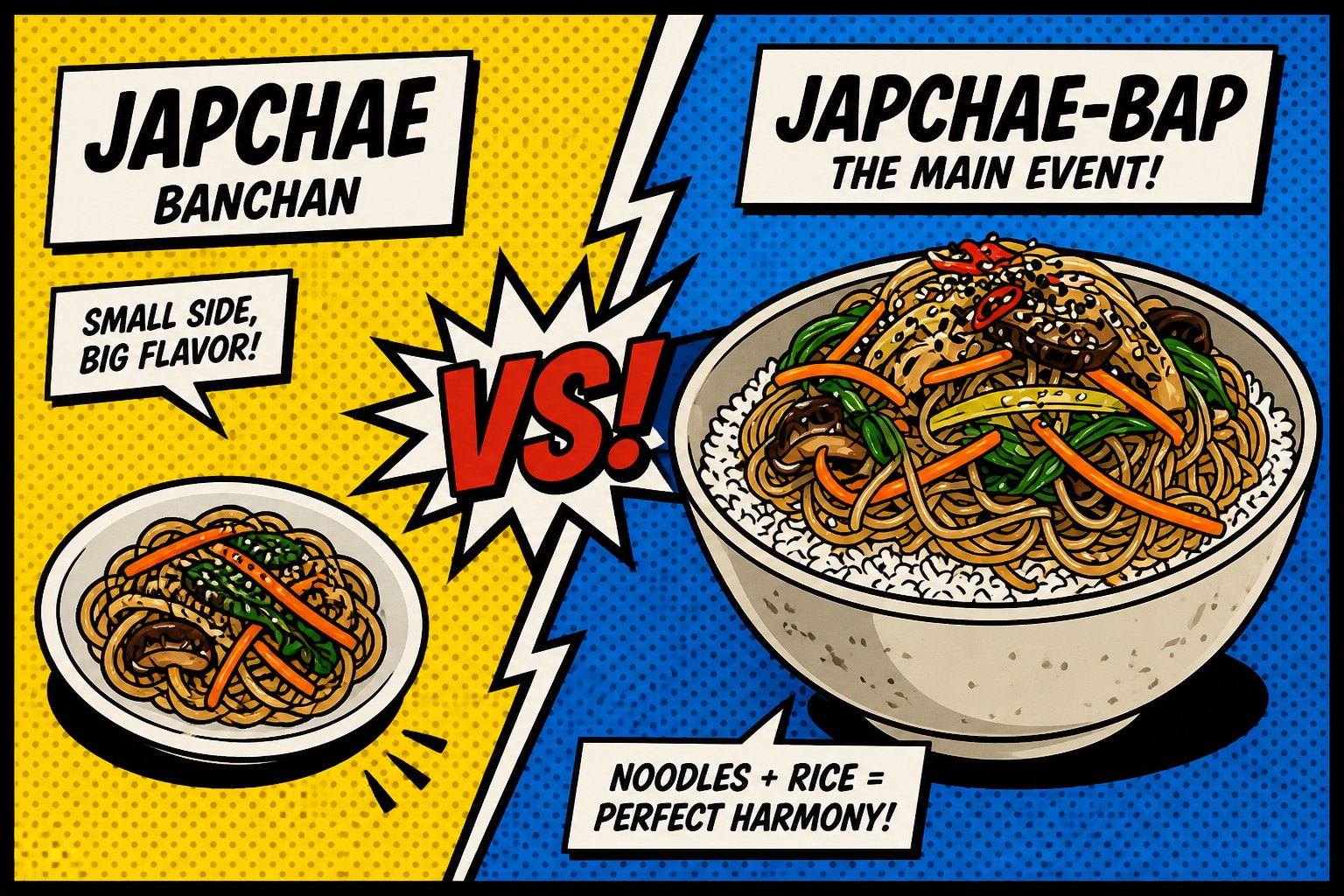
On a full Korean table, japchae is a modest mound among many sides. As japchae-bap or a party tray it can carry the meal. Street and market versions run sweeter and saucier. Match portion and sweetness to the neighboring dishes — especially grilled meat from bulgogi.ai — not to a single “correct” bowl.
This site already has a short culture post at /blog/japchae-as-banchan-vs-main-japchae-bap/. It is the sketch. The search “japchae as banchan” still wants more: grams on the table, what to cook beside it, and how leftovers become lunch without turning into a second greasy stir-fry. That is this page.
Banchan portion first. At a holiday or BBQ spread, japchae is one plate among jeon, kimchi, namul, and a main protein. Think a heaped serving-spoon per person, not a pasta bowl. The noodles are there for color (the old five-color idea from /blog/royal-court-origin-joseon-banquet/) and for a sweet-sesame chew between bites of meat or stew. If you fill a dinner plate with japchae and call it the only dish, you have changed the job. That is allowed. It is just no longer banchan.
What sits next to it on a real grill night is not more noodles. It is lettuce, ssamjang, and beef or pork. Point the protein at the BBQ hub: https://bulgogi.ai/recipes/seoul-style-so-bulgogi/, https://bulgogi.ai/recipes/samgyeopsal-gui-pork-belly/, or the directory at https://bulgogi.ai/restaurants/ when you are eating out. Japchae’s sweetness is built to live beside salty-fat grilled meat. If the meat is already a sweet marinade, pull a little sugar from the japchae sauce so the table does not taste like one note. Sauce math: /blog/sauce-balance-soy-sesame-sugar/.
As a main, Koreans often do japchae-bap: noodles over rice, sometimes a fried egg, sometimes a drizzle of gochujang. The noodles season the rice. You do not need a second sauce if the japchae was seasoned correctly to begin with. This is leftover engineering as much as a restaurant menu. Keep the vegetable-to-noodle ratio high so the bowl is not only starch on starch.
Party tray and dosirak are the third job. Sweet potato noodles stay pleasant at room temperature longer than rice does, which is why japchae dominates potlucks and packed lunches. The science of that hold is /blog/dosirak-party-japchae-room-temp-science/. For a picnic, toss with a teaspoon extra sesame oil, pack pickled radish separately, and do not leave meat-heavy japchae in a hot car. Room-temp friendly is not the same as “ignore food safety.”
Street and market japchae is usually a main-ish snack: sweeter, oilier, sold by the tray next to tteokbokki. If you are building that kind of table, the street-food hub is https://tteokbokki.ai/recipes/classic-school-tteokbokki/ and https://tteokbokki.ai/blog/street-food-ecosystem-eomuk-sundae-twigim/. Home holiday japchae should be cleaner and more sesame-forward so it can sit next to galbi-jjim without cloying. Same noodles, different neighbors.
How to portion a cook. For banchan service for six at a BBQ, 200 g dry dangmyeon is plenty. For japchae as the main for four, 300–400 g dry plus a protein is closer. The royal beef method is /recipes/classic-japchae-royal/. The weeknight one-pan is /recipes/one-pot-japchae/. Do not double the oil when you double the noodles; double the vegetables instead.
Make-ahead: cook the noodles and vegetables, dress them, and hold. Re-toss with a spoon of water and a few drops of sesame oil before serving. Cold japchae from the fridge will feel tight; that is starch, not a seasoning failure. The leftover transforms — jeon and mandu filling — are /blog/leftover-japchae-jeon-mandu-filling/. Banchan that becomes tomorrow’s dumpling is a success, not a comedown.
Kimchi on the side changes the read. A small dish of aged napa or kkakdugi makes a sweet japchae taste intentional. Those jars live on https://kimchee.ai/recipes/tongbaechu-kimchi-classic/ and https://kimchee.ai/recipes/kkakdugi-cubed-radish-kimchi/. If the rest of the table is already two spicy dishes, pull heat from the noodles and let sesame do the work.
What we will not do is invent a national survey of “how most Koreans serve japchae on Tuesdays.” Households differ. Restaurant set menus differ. The useful rule is local: look at the rest of your table. Crowded with mains? Spoon, do not platter. Empty fridge and a bag of dangmyeon? Make it the main and add an egg. That is the whole fork.
If you arrived from the Suga/RM “try japchae” cite, the sourced page is /blog/suga-rm-amazon-try-japchae/. If you arrived from color rankings, /blog/top-5-japchae-colors-royal-banquet-to-bts-v-favorite/. This post is only service and portion. Keep the cluster from cloning itself.
Glass noodles are naturally wheat-free if the label is 100% sweet potato; the sauce is the gluten risk. That note stays on /blog/gluten-free-and-modern-diet-adaptations/. Buy dangmyeon as dangmyeon, not as rice vermicelli. The chew is the reason japchae can be a side or a main without tasting like leftover spaghetti.
How the plate looks tells you the job. Banchan japchae is a shallow mound, noodles cut or twirled short enough to pick up with chopsticks between bites of meat. Main japchae is a deeper bowl or a rice plate, often with a visible protein and a fried egg. Market japchae is a glossy pile in a foam tray. If you serve banchan-size japchae as the only starch at a table of drinkers, people will still be hungry. If you serve market-size japchae next to galbi and rice, the table will be only sweet. Match the mound to the rest of the food.
Vegetable cut is how a small portion still feels like a dish. Julienne spinach, carrot, onion, and mushroom so every bite of banchan has color. A main bowl can take larger pieces and a few strips of beef or mushroom “steak.” The royal method already writes this down at /recipes/classic-japchae-royal/. The mistake is boiling one pot of mixed vegetables until they are all the same soft orange. Cook them apart, even on a weeknight. It is ten extra minutes and it is the difference between a side and a smear.
When the table is already a Korean BBQ spread from https://bulgogi.ai/, japchae should be cooler and less oily than a street tray. Taste the noodles next to a piece of galbi before you add another spoon of sugar. If the marinade is already sweet, the noodles only need soy, sesame, and a little garlic. When the table is a late-night tteokbokki setup from https://tteokbokki.ai/, a sweeter, oilier japchae is the market logic — two snacks, not a banquet. Same bag of dangmyeon. Different neighbors. That is the whole article, restated so you can cook tonight.
More Korean food
Relevant pages on the two hub sites — recipes and a BBQ directory on bulgogi.ai, street rice cakes on tteokbokki.ai.
- bulgogi.ai — recipes & BBQ directory →Marinades, cuts, and a USA Korean BBQ map.
- tteokbokki.ai — street rice cakes →School-cart sauce, rose, mala, and tteok types.
- Bulgogi and galbi recipes →Holiday tables pair japchae with grilled beef, not more noodles.