GUIDE · 2026-10-05
Dangmyeon Buying Guide — Sweet Potato Glass Noodles, Not Cellophane
By Japchae Curator
What to look for on a dangmyeon bag: sweet potato starch, thickness, cook time, and the gluten-free line — plus what happens if you buy mung-bean noodles by mistake.
TL;DR
Buy Korean dangmyeon made from sweet potato starch. Avoid mung-bean cellophane and rice vermicelli for japchae. Thicker strands need a longer boil. Check soy separately if you need gluten-free. How to cook them: /blog/how-to-make-japchae/ and /blog/japchae-fundamentals-dangmyeon-chew/.
Dangmyeon is the chew of japchae. If the bag is wrong, no sauce ratio will save the plate. This is a buying page, not a brand awards list. We will not invent a ranking we did not taste blind.
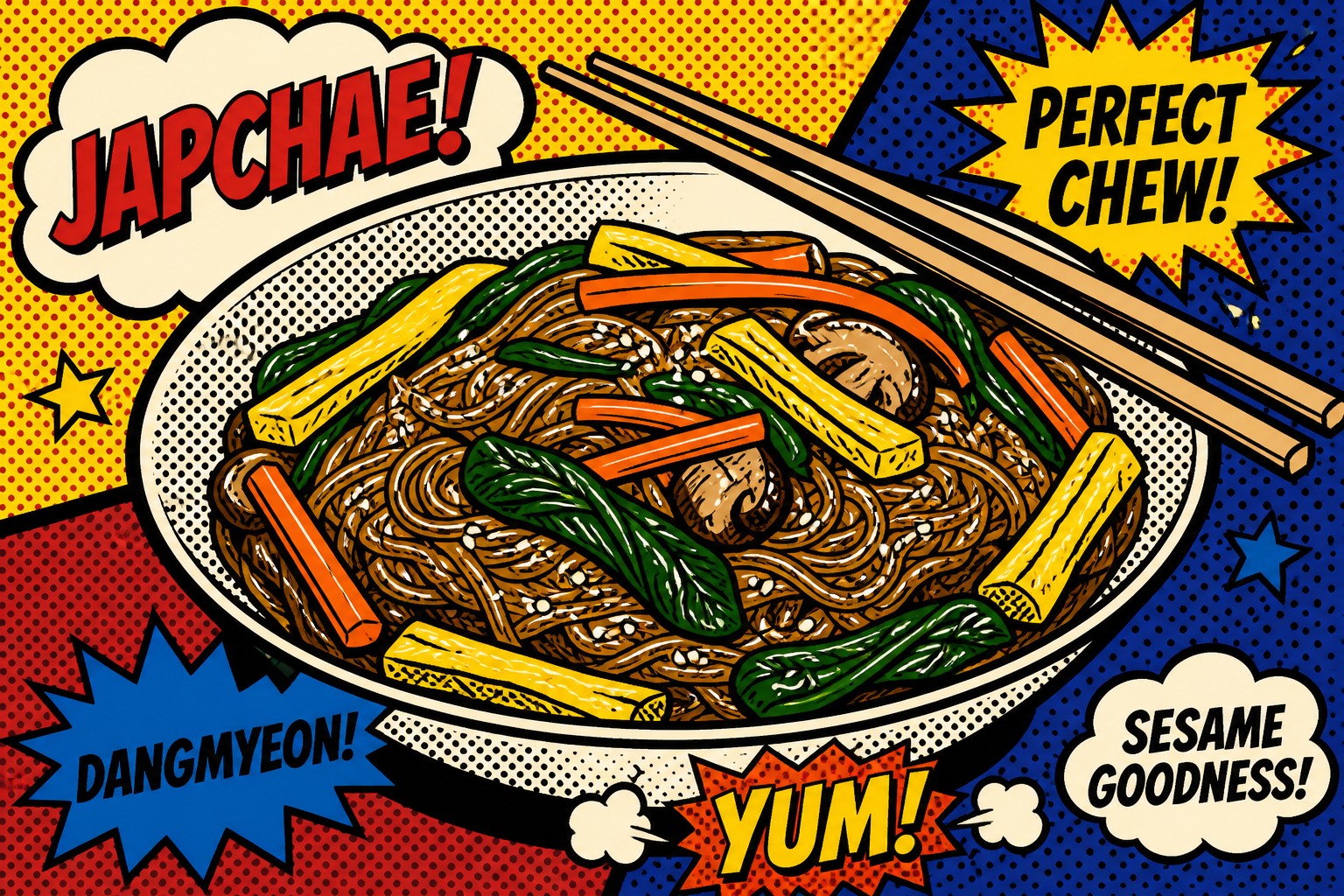
The starch. Korean japchae noodles are sweet potato starch (sometimes mixed with other starches — read the line). They dry gray-tan, cook translucent gray-brown, and stretch. Mung-bean cellophane noodles cook clearer, thinner, and more brittle. Rice vermicelli turns white and soft. Both of those make a different dish. If the bag says “glass noodle” and shows a Thai salad, look again.
Thickness. Thin dangmyeon cooks faster and suits a lunchbox. Medium is the supermarket default and the texture most home recipes assume. Thick restaurant strands need extra boil minutes and a slightly wetter finish toss. Mixing thicknesses in one pot is how you get soup and wire in the same chopsticks.
Weight. 200 g dry is the classic-recipe amount on this site. 500 g bags are common; leftover dry noodles live in the pantry for a year if they stay dry. Cooked noodles do not — they are a leftover problem, not a pantry item.
Gluten-free labels. Pure sweet potato dangmyeon is typically wheat-free. Factories and soy sauce are the risk. If you need the whole plate GF, buy a bag that says so and use tamari. Do not trust a generic “glass noodle” from a mixed aisle. /blog/gluten-free-and-modern-diet-adaptations/.
Cook time on the bag is a starting number, not a law. Taste a strand. Stretch, spring, no chalky core. Then rinse. The fundamental chew essay is /blog/japchae-fundamentals-dangmyeon-chew/. The first-time method is /blog/how-to-make-japchae/.
Soaking versus boiling. Some packages say soak. Japchae almost always wants a real boil so the center hydrates before the stir-fry. A soak-only noodle stays tight and then either stays tight in the pan or goes gummy when you chase it with oil.
Color after cooking. Gray-translucent is correct. Bright white means you bought rice noodles. Clear-silver threads that snap are often mung bean. Orange or red noodles are a different product (sometimes sweet potato with coloring) — fine if you meant them, confusing if you wanted a court-color plate you dye with vegetables, not the pasta.
Where to shop. A Korean grocer will have more than one thickness. A general Asian aisle may have one bag, often the right one if it says dangmyeon or “Korean sweet potato noodle.” Online grocery listings confuse names. Read starch, not the stock photo of japchae.
Substitutes that are honest. If you cannot find dangmyeon, do not make “japchae” with spaghetti. Make a vegetable namul plate and wait. If you already opened mung-bean noodles, cook a different stir-fry and do not call it japchae on a holiday table.
Price. These noodles are cheap compared with the vegetables and the sesame oil. Buy the starch you need. Do not cheap out on rancid sesame oil to “save” a two-dollar bag of dangmyeon. Rancid oil is the flavor people blame on the noodles.
Affiliate note. Recipe and pantry blocks may link Amazon searches for dangmyeon and sesame oil. The tag is empty until Associates is live. We still will not invent a “#1 noodle.”
After you buy. Store dry. Cook once. If the bag was wrong, the mistakes page will not fix the starch — /blog/japchae-mistakes/ is for technique on the right noodle. If the bag was right and the plate is still dull, it is usually wet spinach or a crowded pan, not the brand.
More Korean food
Relevant pages on the two hub sites — recipes and a BBQ directory on bulgogi.ai, street rice cakes on tteokbokki.ai.
- bulgogi.ai — recipes & BBQ directory →Marinades, cuts, and a USA Korean BBQ map.
- tteokbokki.ai — street rice cakes →School-cart sauce, rose, mala, and tteok types.
- Bulgogi and galbi recipes →Holiday tables pair japchae with grilled beef, not more noodles.