RECIPES · 2026-10-05
How to Make Japchae — Korean Glass Noodles, One Color at a Time
By Japchae Curator
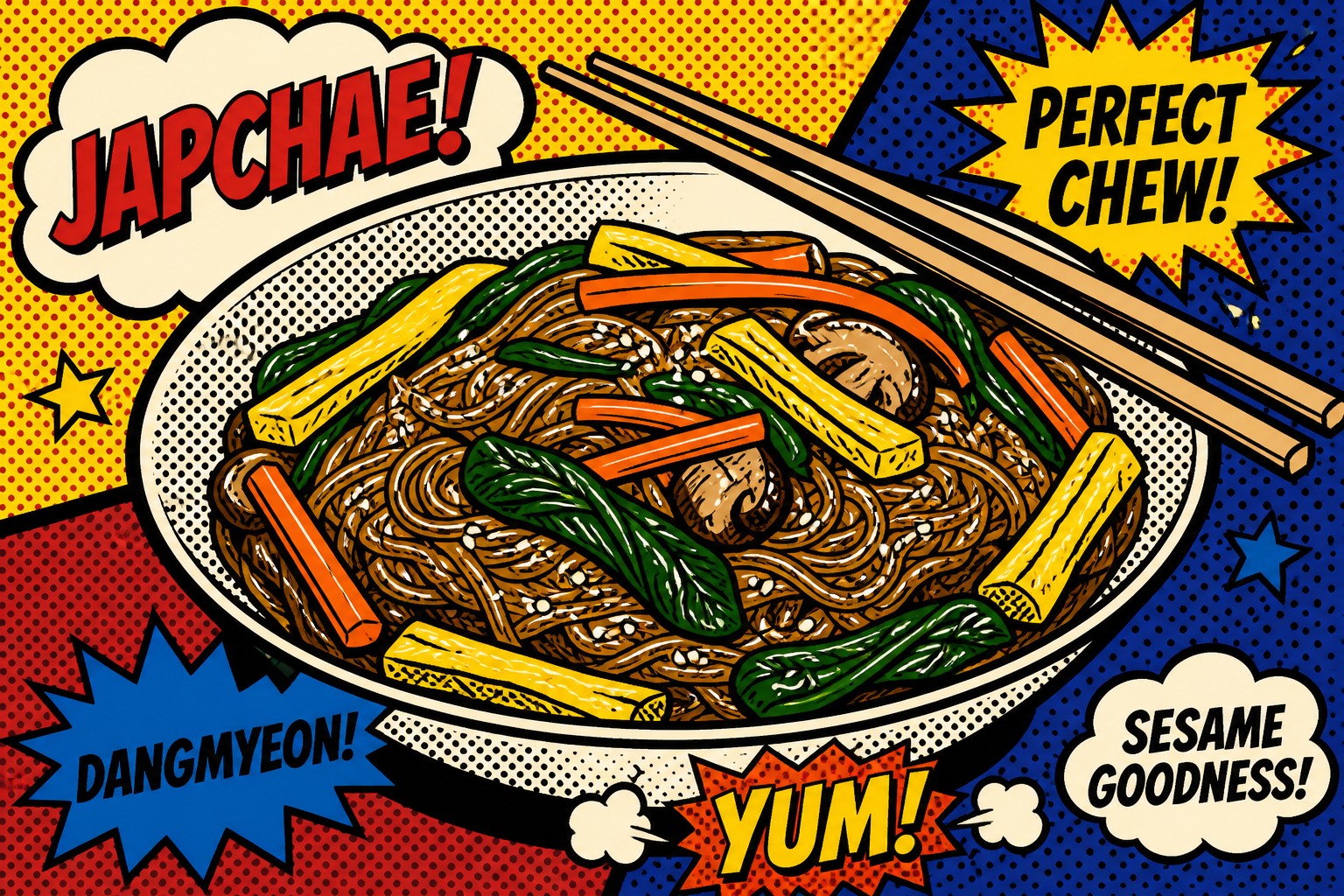
The first-time japchae method: cook dangmyeon to a spring, season it first, then stir-fry each vegetable separately so the plate stays five colors, not one brown tangle.
TL;DR
Boil 200 g dangmyeon until a strand stretches without snapping, rinse cold, cut, toss with soy and sesame. Sear beef, carrot, onion, and mushroom in sequence. Wring spinach dry. Toss everything on low heat with 3 Tbsp soy, 1.5 Tbsp sugar, 1.5 Tbsp sesame oil. The short card is /recipes/classic-japchae-royal/. Banchan vs main: /blog/japchae-banchan-vs-main-how-koreans-serve-it/.
Japchae is sweet-potato glass noodles (dangmyeon) tossed with soy, sesame, and vegetables cooked so each color stays itself. It is a holiday plate and a leftover lunch. It is not lo mein, not vermicelli salad, and not a one-pan “dump dinner” the first time you cook it. This page is the method. The short card is /recipes/classic-japchae-royal/.
Buy dangmyeon labeled sweet potato starch, not mung-bean cellophane and not rice sticks. Dried bundles look gray-brown and turn translucent when cooked. 200 g dry is a generous four-person banchan or two hungry mains. The buying notes — brands, thickness, gluten-free labels — are /blog/dangmyeon-buying-guide/.
Boil in plenty of water. Package times run short. Cook until a strand stretches, then springs back, usually 7–9 minutes. If it snaps like plastic, it is early. If it melts into jelly, it is late. Drain, rinse under cold water to stop the cook and wash surface starch, then cut into 15–18 cm lengths with shears. Toss immediately with 1 tablespoon soy and 1 tablespoon sesame oil. That pre-season coat is why restaurant japchae tastes seasoned through, not painted at the end.
Vegetables are a sequence, not a crowd. Carrot matchsticks, onion slices, and shiitake each get about 90 seconds in a lightly oiled pan with a pinch of salt, then come out. Spinach is blanched 30 seconds, shocked, and wrung in a towel until it is almost dry, then seasoned with salt and a few drops of sesame oil. Wet spinach is how a whole plate turns gray. Knife thickness is /blog/vegetable-prep-julienne-mushroom-spinach/.
Beef is optional historically and common now. Thin sirloin, 150 g, marinated 15 minutes in a spoon of soy, a pinch of sugar, and sesame oil. Sear 90 seconds and pull. Crowding the pan steams the meat and floods the noodles later. No beef: use the mushroom trio on /recipes/vegetarian-temple-japchae/ — king oyster torn by hand, shiitake, wood ear.
The finishing toss is low heat. Noodles, vegetables, and beef go back in with 3 tablespoons soy, 1.5 tablespoons sugar (or 2 tablespoons oligodang / plum syrup), and 1.5 tablespoons sesame oil. One minute. You are marrying, not frying. Scallion and toasted sesame seeds off the heat. Taste. It should read soy first, sweet second, sesame last. Ratio notes: /blog/sauce-balance-soy-sesame-sugar/.
Color is not decoration. Classic plates show green, white, yellow (egg strips), dark mushroom, and orange carrot — the old five-direction palette. The court dish started without noodles; the history is /blog/royal-court-origin-joseon-banquet/ and the longer culture note /blog/japchae-history/. If everything is tan, you crowded the pan or skipped the wring.
Serve warm or at room temperature. Japchae is famous for sitting on a party table without collapsing, which is why it shows up in dosirak and potlucks. Refrigerated leftovers firm as starch sets; reheat covered with a splash of water, then a few drops of sesame. Do not microwave a brick on high and walk away. Leftover transforms (jeon, mandu filling) are /blog/leftover-japchae-jeon-mandu-filling/.
What this method refuses. A single crowded skillet of raw noodles and raw vegetables “to save dishes” on the first try — that is /recipes/one-pot-japchae/, a different texture, after you know the separate-stir plate. A gochujang-heavy “spicy japchae” as your first pot — that is a variation, not the definition. A bulgogi leftover dump that turns the noodles into a second BBQ plate — cite https://bulgogi.ai/recipes/seoul-style-so-bulgogi/ for the meat, then come back and toss lightly.
Holiday versus weeknight. Chuseok and a BBQ spread want the banchan mound, not a pasta bowl. That job split is already written at length: /blog/japchae-banchan-vs-main-how-koreans-serve-it/. A thin older post on the same topic is kept for old URLs and is not the page to rank.
Common mistakes — soggy noodles, clumped starch, bland soy, gray spinach — have their own page: /blog/japchae-mistakes/. If you only read one paragraph: rinse, wring, separate pans, pre-season the noodles.
Gluten. The noodle is usually wheat-free. The soy often is not. Use tamari if you need the plate to stay gluten-free, and check marinades. /blog/gluten-free-and-modern-diet-adaptations/.
Table neighbors. Galbi and bulgogi on https://bulgogi.ai/. A spicy street plate on https://tteokbokki.ai/. Kimchi that actually belongs next to a sweet-sesame noodle: https://kimchee.ai/recipes/baek-kimchi-white-kimchi/. Japchae does not replace those dishes. It sits beside them.
Pantry without a fake “best of.” Dangmyeon, toasted sesame oil, soup or regular soy, spinach, carrot, a mushroom you will actually sear. Recipe-page Amazon searches stay untagged until the network Associates tag is set. Cook the plate once as written. The second time you will skip this page and that is the point.
More Korean food
Relevant pages on the two hub sites — recipes and a BBQ directory on bulgogi.ai, street rice cakes on tteokbokki.ai.
- bulgogi.ai — recipes & BBQ directory →Marinades, cuts, and a USA Korean BBQ map.
- tteokbokki.ai — street rice cakes →School-cart sauce, rose, mala, and tteok types.
- Bulgogi and galbi recipes →Holiday tables pair japchae with grilled beef, not more noodles.