METHODS · 2026-10-05
Japchae Mistakes — Soggy Noodles, Gray Spinach, and One-Pan Mud
By Japchae Curator
Why homemade japchae turns clumpy, bland, or brown — and the small sequence changes that fix it without a new ingredient list.
TL;DR
Rinse and oil the noodles. Wring spinach dry. Cook vegetables separately. Toss on low heat. Do not use soak water, do not dump raw everything in one skillet the first time, do not fix blandness with more oil. Method: /blog/how-to-make-japchae/.
Japchae fails in a short list of ways. The ingredient list is simple, so the sequence is the recipe. If your plate is brown, wet, clumped, or bland, match the symptom below before you buy a different soy.
Soggy or slimy noodles. You skipped the cold rinse, or you boiled them to jelly, or you added them to a wet vegetable pan. Rinse until the strands feel slippy-clean, not starchy. Drain hard. Oil-and-soy toss before they meet vegetables. Reheat leftovers with a splash of water, not a new puddle of oil.
Clumped brick. Surface starch plus a crowded bowl. Cut the strands. Toss while they are still warm after the rinse. If they sat in a colander for twenty minutes un-oiled, wet your hands and loosen, then oil. Do not dump a cold clump into a screaming pan and hope.
Gray-green sludge. Spinach was not wrung. Its water dilutes soy and paints everything army green. Blanch, shock, wring in a towel like you mean it, season separately, then fold in. /blog/vegetable-prep-julienne-mushroom-spinach/.
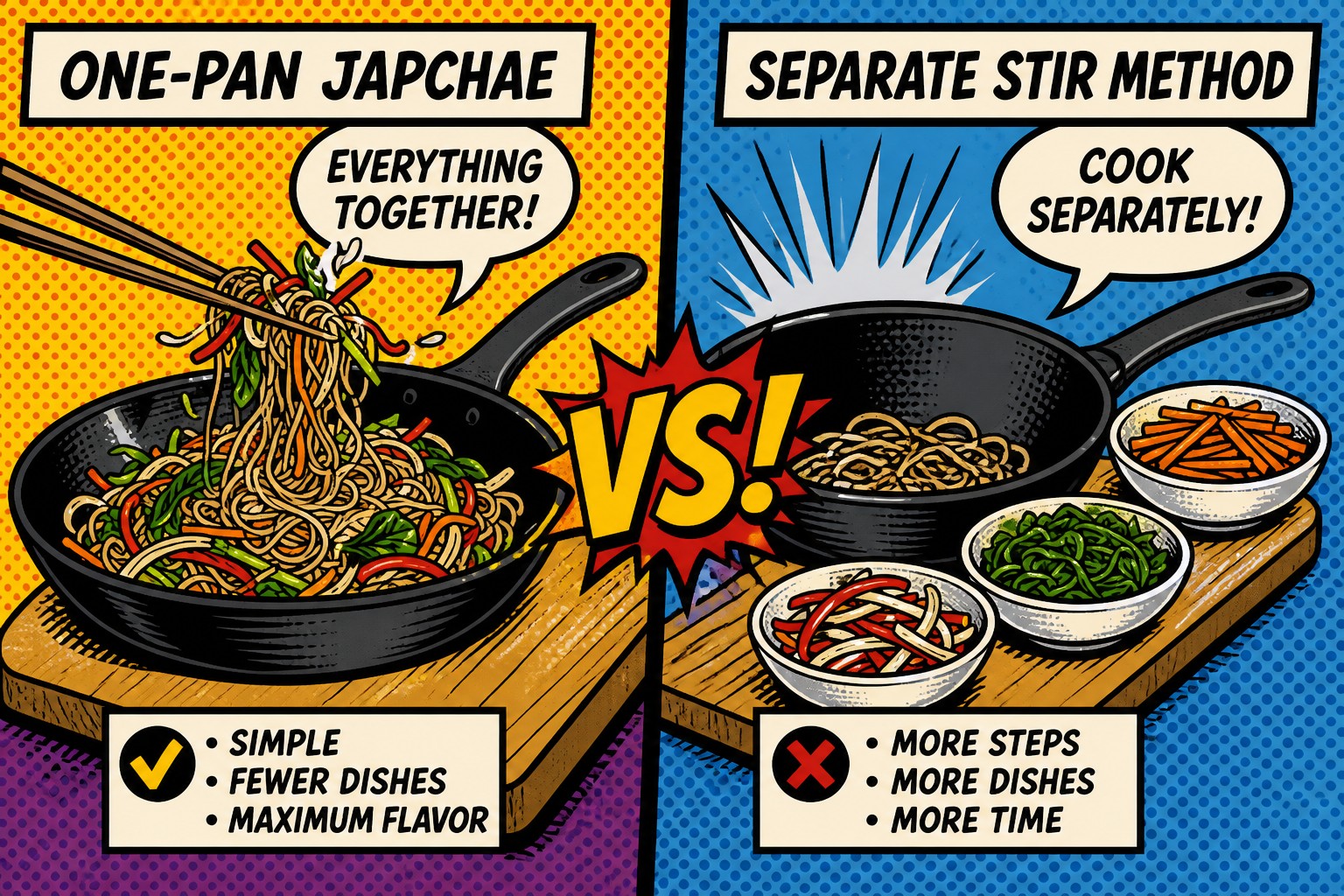
One brown tangle. You stir-fried every vegetable together, or you used a small pan, or you finished on high heat until the sugar in the soy scorched. Separate 90-second sears. Low-heat marry. Color is /blog/royal-court-origin-joseon-banquet/.
Bland. Noodles were not pre-seasoned, or vegetables were not salted in the pan, or you tasted before sesame went on. Fix with a measured spoon of soy and a pinch of sugar, not a glug of oil. Oil carries aroma; it does not replace salt. /blog/sauce-balance-soy-sesame-sugar/.
Too sweet. You used the same sugar as a tteokbokki pot, or you added honey on high heat. Tip in a splash of soy and a handful of unsalted noodles or vegetables if you have them. Next time, start under-sweet. Plum syrup is easier to add than to subtract.
Greasy. Too much oil on the vegetables, which the noodles then drank. Next batch: film the pan, do not pool it. Sesame oil is a finish, not the stir-fry fat. Neutral oil for the sears.
Rubbery beef. Crowded pan, wet marinade dumped in, or a lean cut cooked like stew. 90 seconds, pull. Or skip beef. Mushroom japchae is older than beef japchae.
One-pan weeknight mud. The one-pot recipe exists for a reason and it will never eat like the banquet plate. Use /recipes/one-pot-japchae/ when that is the trade you want. Do not use it as the first-time method and then decide you “cannot cook japchae.”
Leftovers that taste like fridge. Starch set. Splash of water, cover, gentle heat, sesame at the end. Or chop for jeon. /blog/leftover-japchae-jeon-mandu-filling/. Do not boil leftover japchae as if it were soup.
Wrong noodle. Mung-bean or rice sticks will not become dangmyeon in the pan. /blog/dangmyeon-buying-guide/. If you already cooked the wrong bag, serve it as a different stir-fry and cook japchae tomorrow.
Holiday portion panic. A pasta-bowl of japchae next to galbi is a main, not banchan. That is allowed. It is a different job: /blog/japchae-banchan-vs-main-how-koreans-serve-it/. Do not “fix” a heavy plate by adding more oil and sugar so it tastes like a side. Serve less.
More Korean food
Relevant pages on the two hub sites — recipes and a BBQ directory on bulgogi.ai, street rice cakes on tteokbokki.ai.
- bulgogi.ai — recipes & BBQ directory →Marinades, cuts, and a USA Korean BBQ map.
- tteokbokki.ai — street rice cakes →School-cart sauce, rose, mala, and tteok types.
- Bulgogi and galbi recipes →Holiday tables pair japchae with grilled beef, not more noodles.